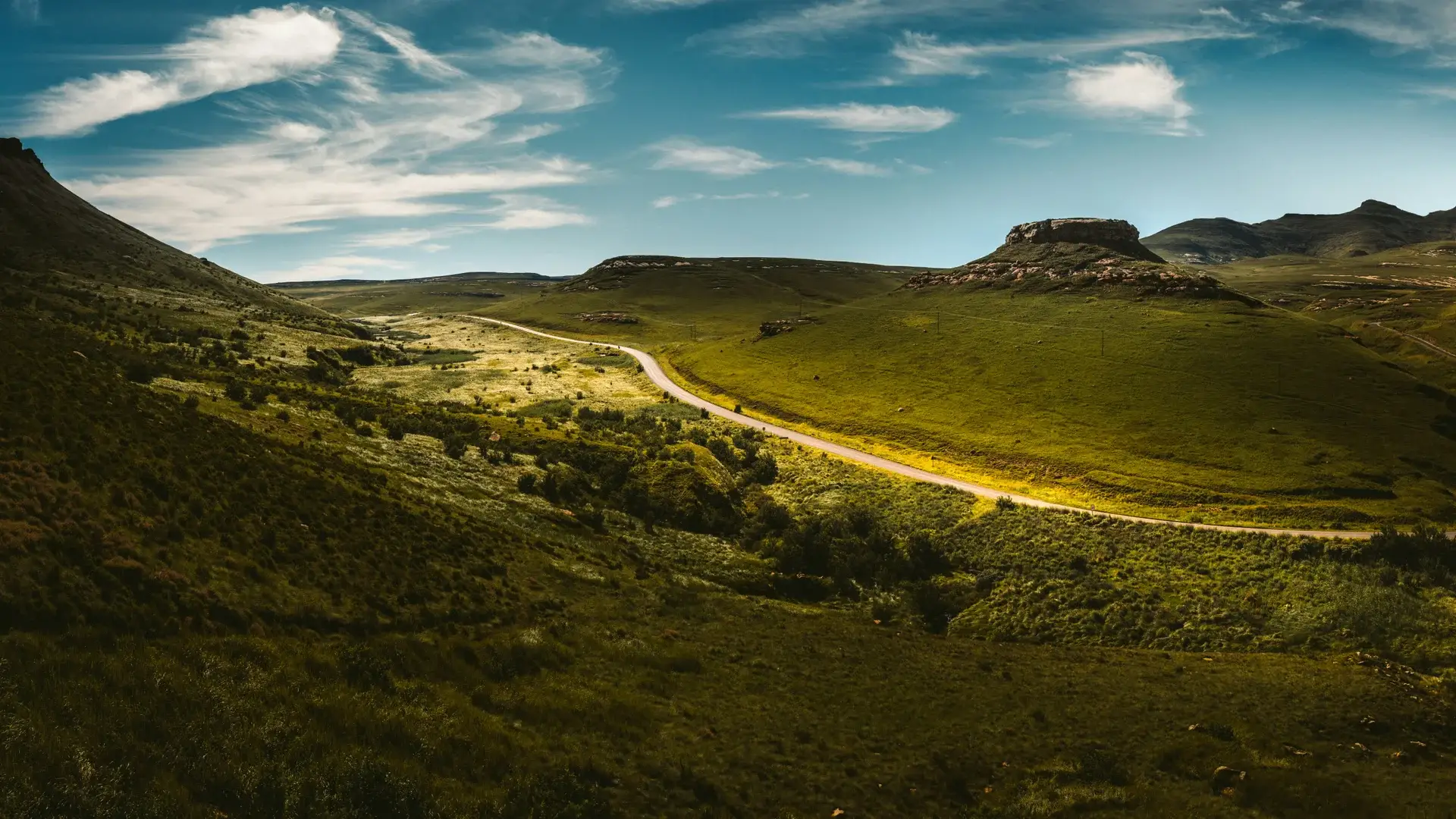
Clarens offers a rewarding trout fishing setting, where clear mountain water, still dams and Free State scenery set the pace for an unhurried day outdoors. Whether you are learning to cast a fly or refining a careful presentation, the area can add a memorable fishing experience to a stay in the village.
The Little Caledon River and local still-water dams are closely associated with trout fishing in the wider Clarens area. Conditions vary considerably with season, rainfall, water levels and access arrangements, but the combination of cold mountain water, cascades and open highland landscapes gives fishing here a distinctive character. It is a destination best approached with flexibility, good preparation and respect for the landowners and managers who make access possible.
Why Clarens appeals to fly fishers
The eastern Free State is known for its big skies, sandstone slopes and crisp winter weather. Around Clarens, mountain streams can run clear and lively over rocky sections, while dams offer calmer water and a different set of fishing challenges. River fishing often rewards stealth, accurate casting and close observation; still-water fishing can favour patient retrieves, depth control and reading wind direction.
This variety is part of the appeal. A beginner can enjoy the straightforward pleasure of practising casting on open water with guidance from an experienced companion or local operator. More seasoned fly fishers may appreciate the technical decisions involved in approaching shallow runs, selecting suitable flies and adjusting to changing light, temperature and water clarity. No two sessions are the same, particularly after rain or during a cold spell.
River fishing and still-water options
The Little Caledon River
The Little Caledon is one of the waterways linked with trout fishing around Clarens. Small streams demand a light-footed approach: avoid casting a shadow over likely holding water, keep movements quiet and work methodically through runs, pockets and slower edges. Water that appears modest can still hold fish, especially where there is cover, depth or a current seam.
Access to river sections is not automatic. Parts of the river and its tributaries may cross private land, and water conditions can make certain stretches unsuitable or inaccessible. Ask locally which legal, managed access options are available for your intended dates, and do not assume that a visible riverbank is open to anglers.
Dams near Clarens
Still-water dams provide another route into local trout fishing and can be especially welcoming for visitors who prefer room for a back cast or a more relaxed pace. A dam near the golf estate was historically used for fishing, with permits obtained through the local golf pro shop. Treat that information as background rather than a current arrangement: contact the golf estate, pro shop or relevant local operator directly to confirm whether fishing is available, where access is allowed and how permits are handled before travelling.
Some waters may have their own rules on fishing methods, barbless hooks, daily limits, fish handling or whether anglers may keep fish. These rules protect the fishery and can differ between venues, so check them before you set out.
Getting access and permits right
Start planning before packing the car. Clarens accommodation hosts, fly-fishing guides, tourism information points and land or venue managers can often direct visitors to current opportunities. Ask specific questions: Is the water open to day visitors? Is advance permission required? Are permits sold on site or elsewhere? Is a guide recommended or compulsory? What tackle restrictions apply? Is catch-and-release expected?
It is also wise to confirm road conditions, weather forecasts and the likely state of the water shortly before your visit. Heavy rain can colour streams, alter crossings and affect fishing, while cold winter mornings may bring frost and very low temperatures. Never enter a waterway that is flowing strongly or cross unfamiliar water without assessing it carefully.
What to pack for a fishing day
Your preferred outfit will depend on the water you have secured access to, but practical, adaptable kit goes a long way. For fly fishing, a suitable rod and reel, floating line, leaders, tippet and a modest selection of locally appropriate flies are useful starting points. Polarised sunglasses help reduce glare and protect your eyes; a landing net and forceps make fish handling easier and safer.
- Waders or sturdy wet-wading footwear suited to rocky, slippery ground.
- Warm layers, including a fleece or insulated jacket for early starts and changing weather.
- A waterproof outer layer, hat, sunscreen and sunglasses for exposed dam banks and open valleys.
- Drinking water, snacks, a small first-aid kit and a fully charged phone.
- A camera or phone for photographs, but keep it secure and dry near the water.
- Any required permit or written permission, carried with you while fishing.
Clarens can experience bright sunshine and sharp cold on the same day. Layering is more useful than relying on one heavy garment, and footwear with dependable grip is important around wet rocks, muddy banks and uneven paths.
Fish carefully and leave the water better
Responsible catch-and-release helps sustain quality fishing experiences. Use barbless or flattened-barb hooks where required or appropriate, land fish promptly and keep handling to a minimum. Wet your hands before touching a fish, support it gently rather than squeezing it, and avoid placing it on dry grass, rocks or gravel. If a photograph is important, have your camera ready and return the fish to the water quickly.
Release fish in calm water, allowing them time to recover before they swim away. Respect all venue rules, never leave line or litter behind, and take care around nesting birds, livestock and other users of the landscape. Gates should be left as you find them, and private property should only be entered with explicit permission.
Make fishing part of a Clarens escape
A fishing session fits naturally into a longer Clarens stay. Use a morning or late afternoon on the water as the centrepiece of a day, then return to the village for a meal, coffee or a quiet walk among the sandstone scenery. Non-fishing companions can enjoy galleries, village browsing, hiking routes and the surrounding mountain views while anglers pursue a few careful casts.
For the most enjoyable trip, build your itinerary around confirmed access rather than assuming a particular river or dam will be available. Book accommodation that suits your plans, allow time for weather changes, and seek current local advice once you arrive. With the right permissions, sensible gear and a conservation-minded approach, trout fishing can be one of the most peaceful ways to experience Clarens and its surrounding countryside.